 Skip to content Skip to content

Negative reviews are often inevitable when running a business. With so many online platforms available, it’s never been easier to be publicly criticized. But knowing how to respond to negative reviews can actually strengthen your brand. When handled correctly, even a bad review becomes an opportunity to show professionalism, resolve issues, and earn long-term trust.
Of course, positive reviews are incredibly powerful too—they help boost credibility, improve SEO, and attract new customers. But don’t overlook the impact of responding well to the not-so-glowing feedback. This article covers why it matters and how to do it right.
Why Respond to Negative Reviews?
A negative review won’t disappear just because you ignore it. In fact, staying silent often makes things worse. You’re not just replying to one person—you’re speaking to every potential customer reading your reviews.
According to the 2025 BrightLocal Local Consumer Review Survey:
-
83% of consumers read reviews on Google
-
89% expect businesses to respond to all reviews—not just the good ones
-
74% check at least two review sites before making a decision
-
53% want to read reviews that share positive experiences
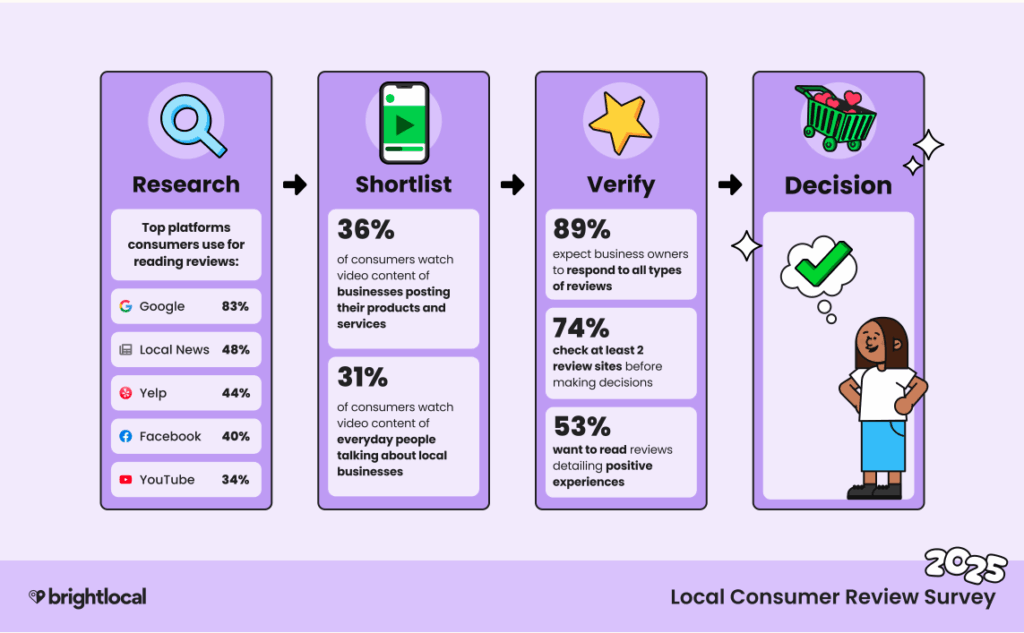
Your reviews, and your responses, can directly shape buyer behavior.
Even more compelling? Customers who receive a resolution are twice as likely to buy from you again.
So, if someone leaves a poor review, consider it a second chance to win them (and others) back.
Strategies For How to Respond to Negative Reviews
1. Investigate and Respond Fast
Start by understanding why the reviewer is unhappy. Check past interactions and get context before replying.
Then, respond quickly. A timely response signals that you care about customer feedback and are actively engaged in your business. Treat it with the urgency of a public-facing customer service issue, because it is.
2. Take Responsibility and Provide a Solution
If the business was at fault, own it. Be honest and explain how you’re making things right. If it wasn’t, clarify your policy or limitations, but stay empathetic.
Avoid generic responses. Tailor your reply to the reviewer’s actual complaint and describe any changes you’ve implemented as a result.
Whenever possible, take the conversation offline. Invite the customer to call or email you, or even stop by in person, to resolve the issue. A thoughtful post-review interaction can often turn a bad experience into a loyal customer.
3. Be Polite and Sympathetic
Even if the review feels unfair, respond with respect. Never share personal details or respond defensively.
Furthermore, always remember to say “thank you for your review” in your replies to negative reviews. You can also apologize when appropriate. Being empathetic with your customer’s complaint shows compassion, even when a review is unfounded.
Try something like:
“Hi [Name], thank you for your feedback. I’m sorry to hear about your experience and appreciate you bringing it to our attention. If you’re open to discussing it further, please call or email us—we’d love the chance to make it right.”
4. Keep Your Response Short and Simple
Avoid long, defensive replies. A lengthy response can validate a complaint or encourage more negative follow-up.
Instead, stick to 3–4 clear, composed sentences that show empathy and offer a solution. Remember your response speaks to future customers too.
Be authentic, not robotic. Ditch the marketing jargon and write like a human. Bonus points if you sign off with your name or initials to make it feel more personal.
5. Avoid Canned Responses
A consistent tone is fine—but avoid reusing the same script for every review. Tailor your message to each situation while following the same framework:
Acknowledge → Apologize → Explain (if needed) → Invite further contact.
6. Get More Positive Reviews
Don’t delete negative reviews—dilute them with positive ones. The best way to build trust is to boost your overall review count.
Research shows that most people read about 10 reviews before making a decision, so aim for at least 10 recent and relevant reviews on platforms like Google, Facebook, and Yelp.
Make Reputation Management Easier with Bright Reviews
Handling reviews manually can be time-consuming. That’s why we recommend Bright Reviews, a platform that makes it easy to:
-
Ask happy customers for reviews via text or email
-
Monitor and respond to reviews from a single dashboard
-
Showcase top reviews on your website
-
Get insights on trends and satisfaction over time
No bribes, no incentives—just genuine feedback that builds trust. Want to see how Bright Reviews can help you get more 5-star reviews (and respond to the tough ones too)? Contact us today to learn more or sign up today.
Final Thoughts
Negative reviews don’t have to be the end of the story. In fact, they can be the start of a better one. Knowing how to respond to negative reviews can set the tone for your brand and influences whether people choose to trust you.
With the right response strategy, and tools like Bright Reviews in place, your business can turn tough feedback into meaningful growth.